Most SEO myths are not lies, and the people passing them on are not trying to mislead anyone. That is exactly what makes them so hard to kill. A myth that was simply false would not last a week, because someone would test it and watch it fall over. The ones that survive are the ones that were genuinely true once, hardened into habit, and never got un-learned when the ground quietly moved underneath them.
So here is the useful lens for the whole topic: most SEO myths are expired truths. Keyword density mattered, back in 2009. Submitting your site to search engines was a real chore, decades ago. The advice was sound the day it was handed out, and it is now quietly costing people afternoons and, once in a while, rankings. In the support threads we read at TamRank, the same handful of expired rules come up again and again. This guide takes the WordPress SEO myths still in heavy rotation and holds each one up against what Google actually says today. It sits under the complete WordPress SEO guide.
- Most SEO myths are expired truths: advice that worked once and never got updated.
- There is no keyword density target, and the meta keywords tag does nothing. Google left both behind years ago.
- There is no duplicate content penalty. Google consolidates duplicate URLs, it does not punish them.
- You do not submit your site to Google over and over. It finds and recrawls pages on its own.
- More pages, longer posts and a paid plugin are not ranking levers. Useful content is.
Why SEO myths persist
Before the list, the shape of the problem, because it tells you how to defend against every myth at once. SEO myths survive on three things. They were true once, so older and genuinely trustworthy sources taught them in good faith. Search is a black box, so you cannot easily run a test and watch a claim collapse. And SEO content feeds on SEO content, so a myth gets copied across ten thousand articles until its sheer ubiquity starts to feel like evidence.
The defence is always the same move: check the claim against Google’s own current documentation. Google is not coy about correcting this stuff, and the corrections sit in plain sight. Every myth below is measured against what Google says now, not against what a blog post insisted in 2012.
Myth: there is an ideal keyword density
The claim: aim for a magic percentage, your keyword should make up 1%, or maybe 2%, of the words on the page. It comes straight out of the early 2000s, when search engines really did tally keyword occurrences, so gaming the count genuinely worked.
That stopped being true a long time ago. Google’s language understanding reads meaning, synonyms and context now, not raw frequency. There is no target density, and Google’s guidance has never once named a figure. Worse, chasing a percentage marches you straight into keyword stuffing, which Google’s people-first guidance flags as a tell that a page was built for a crawler rather than a reader. What to do instead is almost boringly simple: write naturally, cover the topic properly, and let the keywords land wherever they land.
Myth: the meta keywords tag still matters
The meta keywords tag is a hidden HTML tag where you once listed the words a page was meant to rank for. It is the purest expired truth on this list, because unlike most myths it genuinely did do something, once.
Google has ignored the meta keywords tag for ranking for well over a decade, and it said so out loud years ago. Filling it in changes nothing on Google’s side. The one thing it reliably achieves is handing your competitors a neat, itemised list of the keywords you are chasing. Skip it entirely. The meta tags that earn their keep are the title and the meta description, and both of those are about winning the click, not hoarding keywords.
Myth: duplicate content gets a penalty
This is the one that causes real, stomach-tightening anxiety. The story goes that if the same or similar text shows up on more than one URL, Google drops a penalty on you and drags the whole site down with it.
There is no duplicate content penalty. A penalty, in the strict sense, is a manual action taken against a site that breaks Google’s spam policies. Ordinary duplication, the same content on two URLs, a printer-friendly page, a WordPress tag archive that overlaps a category, is not spam, and Google does not punish it. What actually happens is quieter: Google consolidates. It picks one version as the canonical, indexes that, and the rest simply do not rank on their own. The thing genuinely worth avoiding is not a penalty but dilution, your own URLs splitting their signals instead of pooling them into one strong page. Treat duplication as a housekeeping question, answered with canonical tags and a bit of sensible noindexing, not as a punishment to lie awake over. The WordPress settings guide covers the archive duplication that is specific to WordPress.
Myth: you must submit your site to search engines
The claim is that SEO involves regularly submitting your site, or each new post, to Google, and probably to a long list of other engines besides. There are still services out there happy to sell you a “submit your site to 500 search engines” package.
Google finds and recrawls pages by itself, by following links and reading your sitemap. It does not want a scheduled submission from you, and submitting the same URLs over and over accomplishes precisely nothing. You hand Search Console your sitemap once, you can manually request indexing for a single important page when you are impatient, and that is the whole list. There is no recurring submission chore and no directory of engines to notify. Discovery is automatic. The crawling guide walks through exactly how it happens.
Myth: more pages and longer posts rank better
Two myths braided together here, both of them about sheer volume. One says that pumping out more pages, or posting every single day, lifts a site by quantity alone. The other says longer always wins, which is where the endless 2,000-word minimums come from.
Neither matches how Google actually works. Google’s guidance points at useful content, not at a tally, and it never specifies a word count. Publishing a thin page a day does not help you; it hands Google a pile of weak pages, which the helpful content system reads as a signal that the whole site is low quality. And a bloated 2,000-word article does not out-rank a tight 800-word one that answers the question better. The padding only makes it more of a slog to read. Go deep where the topic earns depth and stay short where it does not. Length and page count are things that fall out of covering a subject well, never dials you crank up on purpose. The blog post structure guide takes the length question apart in full.
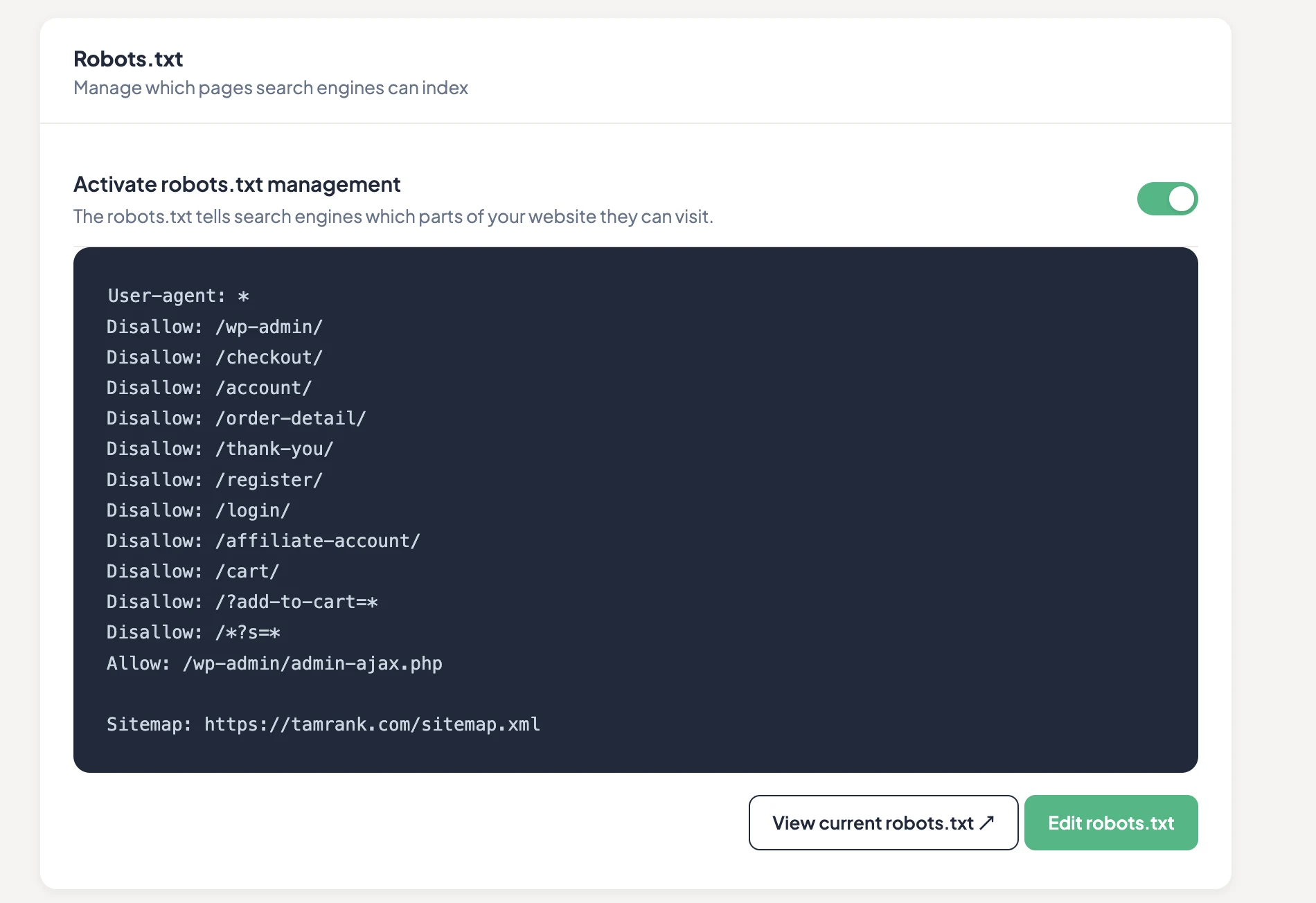
Myth: you should block wp-admin in robots.txt
A WordPress-specific piece of folklore. Old tutorials tell you to drop rules into robots.txt blocking /wp-admin/ and /wp-includes/, dressed up as both a security and an SEO measure.
It is unnecessary, and every so often it backfires. WordPress already handles its own system directories sensibly, and modern versions manage crawler access to the admin area without your help. Hand-editing robots.txt to wall off WordPress folders mostly just creates a chance to block something Google genuinely needs. The classic disaster is a rule that accidentally catches /wp-content/uploads/ and stops Google rendering your pages at all. Unless you have a specific reason you fully understand, leave the default robots.txt where it is. It is not a routine SEO task, and treating it as one is how people quietly break their own sites.
Myth: running Google Ads improves your organic rankings
This myth says that spending on Google Ads, or even just keeping an active Ads account open, signals to Google that your site is legitimate and nudges your organic rankings up. It is one of the stickiest ones going, because it feels so reasonable: you are handing Google money, so surely Google thanks you somewhere.
It is false, and Google has said as much in plain words. Organic search and paid search run on entirely separate systems inside Google. The guidance leaves no wiggle room on payment: “Google doesn’t accept payment to crawl a site more frequently, or rank it higher”. An active Ads account, a big ad budget, pausing your Ads overnight, all of it has exactly zero effect on your organic position. When running Ads does seem to line up with better rankings on someone’s own site, the real cause is almost always sitting just out of frame: the Ads sent traffic that improved engagement signals, or the campaign happened to launch the same week as a genuinely strong piece of content. The Ads themselves moved nothing.
Myth: SEO is a one-time job
The last myth is really a myth about expectations. It says SEO is a project with an end: you optimise the site, you tick it off, you walk away.
SEO is a position you hold, not a box you tick. Google itself describes search as constantly shifting, and the world your content is describing shifts underneath it too. Competitors keep publishing, standards move, articles that were accurate slowly go stale. A site optimised once and then left untouched drifts downward, gently, no matter how good that first pass was. What SEO actually has is a maintenance rhythm, the monthly look and the periodic content refresh, and that ongoing work is laid out in the WordPress SEO checklist and the guide to measuring performance in this cluster.
A worked example: a myth-driven afternoon
Picture how these myths stack up into a wasted afternoon. A WordPress owner sits down for a dedicated “SEO afternoon”, feeling responsible about it. An hour goes on nudging articles toward a 1.5% keyword density. The meta keywords tag gets filled in across thirty posts. A service is found, and the site is dutifully submitted to a list of search engines. Robots.txt gets a fresh set of rules blocking WordPress folders, lifted straight from a 2014 tutorial. It all feels productive.
Measured honestly, that afternoon produced nothing at all. The density tuning did nothing, and it nudged the prose slightly worse. The meta keywords did nothing. The submission did nothing. The robots.txt edit did nothing useful, and had it snagged the wrong folder it would have actively hurt the site. Four hours, zero gain, one near-miss injury. The same four hours poured into fixing one genuinely thin page, or refreshing one decaying article, would have actually moved the site. The cost of SEO myths is not that they are wrong in some abstract way. It is afternoons exactly like this one, repeated across a site’s whole lifetime.
How TamRank helps
It is genuinely hard to let go of a myth when every second article you read repeats it back to you. What helps is a tool that points at real problems and stays quiet about the folklore.
TamRank’s audit and SEO score are deliberately scoped to things that actually move a page: a missing meta description on an important URL, a stray noindex that should not be there, a broken canonical, a thin page that needs real work. It will never ask you to hit a keyword density, it does not grade your meta keywords tag, and it does not manufacture busywork to look useful. If TamRank stays quiet about something, that is usually a decent sign it does not need your attention. A tool that refuses to nag you about myths is, in its own quiet way, an argument against them. We build TamRank, so weigh that accordingly, but the design choice is the honest point here.
It is part of the free plugin. You can install TamRank free or look over the feature list.
WordPress SEO myths FAQ
Is there a duplicate content penalty?
No. Google does not penalise ordinary duplicate content. A penalty is a manual action for breaking spam policies; everyday duplication is not spam. Google simply picks one version as canonical and indexes that. The real issue is signal dilution between your own URLs, fixed with canonical tags and noindexing, not a punishment.
Does keyword density matter for SEO?
No. There is no ideal keyword density and no target percentage. Google interprets meaning and context rather than counting keyword occurrences, and Google’s guidance never names a density figure. Chasing one pushes you towards keyword stuffing, which Google treats as a quality problem.
Do I need to submit my site to Google?
Not repeatedly. Google finds and recrawls pages automatically by following links and reading your sitemap. Submit your sitemap to Search Console once, and optionally request indexing for a single important page. There is no routine submission task and no list of search engines to notify.
Does longer content rank better?
No. There is no word-count threshold for ranking. Google’s guidance points at useful content, not length, and never specifies a count. A concise page that answers the query well beats a padded long one. Length should follow what the topic genuinely needs.
Does running Google Ads improve your organic SEO rankings?
No. Organic search and paid search are entirely separate systems at Google. Google states plainly that it does not rank sites higher because they spend money on advertising. An active Ads account, high ad spend, or pausing Ads all have no effect on organic position. If you notice a correlation between running Ads and better rankings, the cause is something else: Ads-driven traffic may have improved engagement signals, or you launched strong content at the same time as the campaign.
The bottom line
SEO myths stick because they were once true and because search is so hard to test for yourself. Keyword density, the meta keywords tag, the duplicate content penalty, endless site submission, volume for its own sake, blocking WordPress folders, SEO as a one-and-done job: every one of them is either expired or was never real, and every one is still quietly costing people time.
The fix is not memorising a longer list of myths. It is a single habit: when a piece of SEO advice sounds like a hard rule, check it against Google’s current documentation before you act on it. Google publishes what it actually rewards, and it rarely lines up with the folklore. Then spend the hours you just saved on the one thing no myth can stand in for, genuinely useful content. For the rest of the fundamentals, the WordPress SEO guide is where to go. And to work from a tool that only ever flags what matters, install TamRank free.
Sources
- Google Search Central, “In-depth guide to how Google Search works,” on automatic discovery and recrawling, and on Google not accepting payment for ranking. Google developer documentation.
- Google Search Central, “SEO Starter Guide: The Basics,” on useful content as the largest factor, and the absence of any keyword-density or word-count guidance. Google developer documentation.
- Google Search Central, “Creating helpful, reliable, people-first content,” on keyword stuffing and volume-driven content being read as quality problems. Google developer documentation.

